Maddrassah Legacy
Mosque & Maddrassah Support

Our children attend maddrassah every evening, yet we do not attach much significance to them, regarding them merely as places that look after the ummah’s infants. We hold them on a par with nurseries, as a place of elementary learning. We should realise though, that as long as we fail to attach importance to them, we will remain ignorant of our children’s development and progress.

The Maddrassah’s Legacy

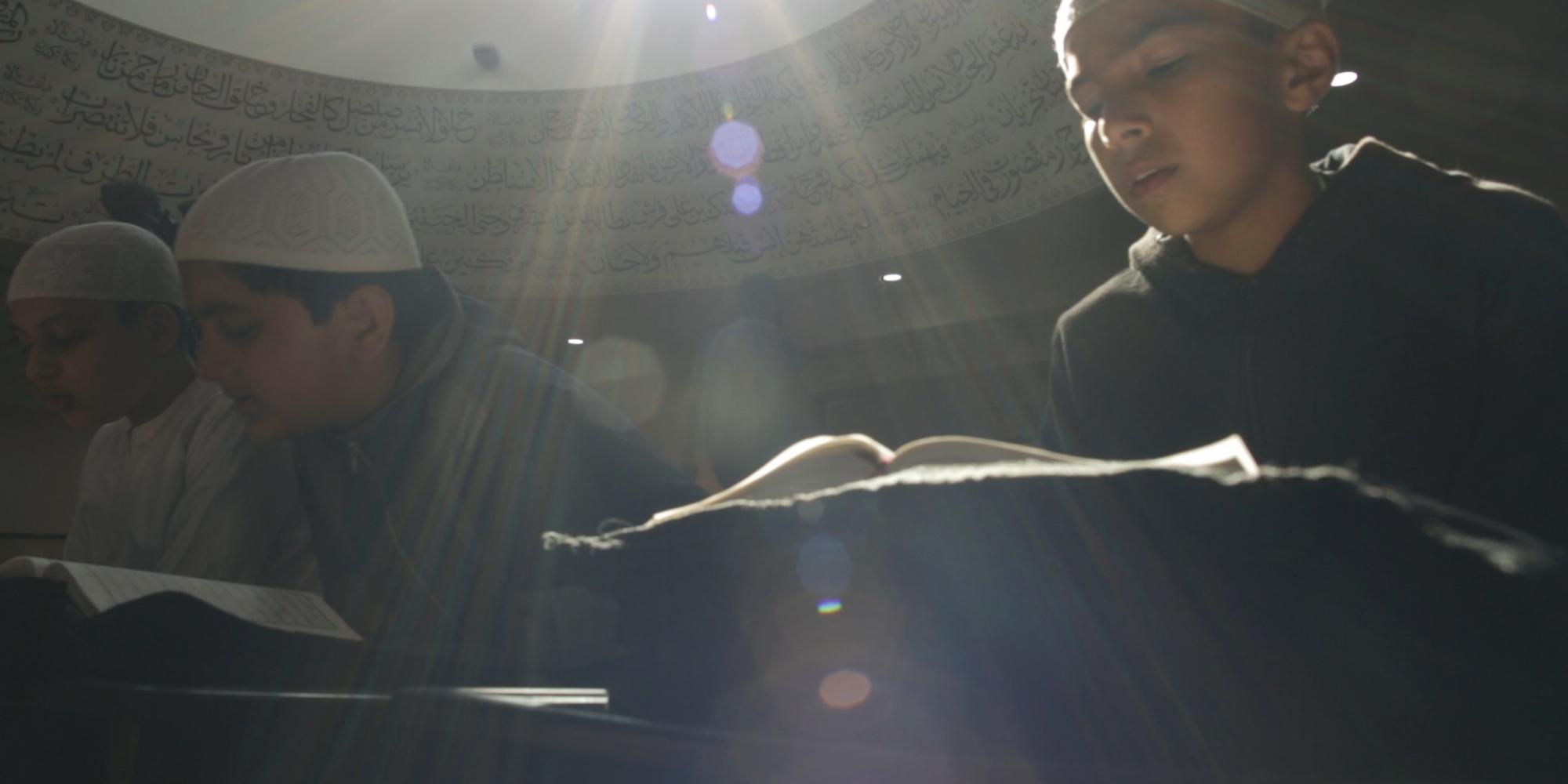
The maddrassah is not an insignificant institute. The flame of imãn (faith) is first kindled in the maddrassah. The light of imãn first permeates the heart of a Muslim child in its environment. It teaches our young children moral values.
It is in the maddrassah where we learn that to lie is a very great evil and that we should always speak the truth. It warned us against the use of bad language and that stealing, cheating and oppressing people are wrong. The maddrassah taught us not to be a thorn in the side of our parents and to care for the elderly, orphans and widows. It was in the maddrassah that we learned that we should be kind to our neighbours, be they Muslim or non-Muslim.
The maddrassah even taught us things that we do as adults, without paying attention to them, like the simple yet rewarding act of removing an obstacle from a path. The good morals and character we take credit for as adults were acquired through the maddrassah. All the teachings we are familiar with and today practice in our lives spring from there. By taking stock of every good deed we are performing and every evil that we have hatred for, we will be witnessing the legacy of the period of our lives between the age of four or five up to thirteen or fourteen: the years spent in the maddrassah.

Maddrassah’s Benefit the Nation

The maddrassah not only brings our children benefits in relation to the hereafter, it also provides them goodness in this world. Parents too, receive worldly gain: a child that spent it’s time well at maddrassah will become a means of comfort and joy to its parents. The maddrassah is a boon for the country as well, because it produces good citizens, regardless of whether it operates in an Islamic state or a secular state. At maddrassah, children are taught to respect the right of all people and are warned against involvement in drugs, alcohol, theft, vandalism and all types of antisocial behaviour. It contributes towards a socially cohesive society and is a great blessing for humanity as a whole.
Rasūlullah s came into this world as a mercy and all his teachings are full of mercy. What is taught in the maddrassah is what the Prophet Muhammad s taught. His life, his character, and his dealings - they all form the basis of what our children learn. Every child who attends a maddrassah becomes familiar with these Prophetic teachings and is equipped to go on to embody them and serve humanity and work for its betterment.

Parents Responsibilities towards Their Children

In order for a child to get the most out of its maddrassah education, parents need to work in partnership with the maddrassah. Parents should not hand over their children to the maddrassah and feel that they have fulfilled their share of educational responsibility. Some parents are content with just enrolling their children in any maddrassah, but even those that take the time to find one that offers the best ta‘līm (education) and tarbiyah (upbringing) should not feel that after enrolling their child their duty has ended.
It is the parents who will be questioned by Allah S about their children’s education. If the teachers, principal or the management committee failed in fulfilling their responsibilities, they will also be held accountable for their actions, but that is of secondary importance. The parents will be questioned and held primarily responsible for any negligence regarding their children.
Allah S will demand the answer to two questions from every parent concerning their child: “What ‘ilm (knowledge) did you give him and what ādāb (good manners/social etiquettes) did you teach him?” Each mother and father will have to answer for each one of their children. At that moment, no parent will be able to blame the child’s teacher or maddrassah chairman.
It is the parents duty to give the correct ta‘līm and tarbiyah to their children. They cannot exonerate themselves from it. In light of this, parents have to keep a close watch on the performance of their chosen maddrassah. In the case of the maddrassah not fulfilling its responsibility, parents should voice their concerns. And if the parent’s concerns are not addressed adequately then they should remove their child and enroll him or her in another maddrassah. It is just like when a child becomes sick and we take him to the doctor; we check the progress of the child and if we feel he is not receiving adequate treatment, we talk to the doctor. If, after a couple of such discussions, the condition persists and it seems pointless talking to the doctor any further, we look for a better doctor. Just as the parents responsible for their child’s physical treatment, they should shoulder the responsibility of their religious upbringing and education too.

Partnership between Parents and the Maddrassah

Parents should also cooperate with the maddrassah and try to understand its aims and objectives. If a maddrassah emphasises punctuality and regular attendance, with few breaks between, parents should cooperate. For instance, if the board of scholars or committee of a particular maddrassah consider it necessary to decrease holidays to allow enough hours to complete the curriculum, parents should ensure the attendance of their child. The people responsible are aware that if they allow longer holidays, the end result will be academic, religious and social underachievement. Therefore parents should cooperate with the maddrassah; a vast amount of time and effort is spent in deciding what is best for our children.
Being involved with both the maddrassah and dārul‘ulūm educational systems, I am of the opinion that more than the dārul‘ulūm, it is the maddrassah that is of crucial importance to the Muslim community, since ninety percent of Muslim children will pass through it. Not every Muslim child will participate in tablīgh jamāt, neither will every child associate himself to a Shaykh for spiritual guidance, sit in the company of the ‘ulamā (scholars) or pursue studies at a dārul ‘ulūm. However, nearly every child will study at a maddrassah. This fact is enough for us to understand the primary importance of the maddrassah system in educating our children to become good Muslims, who will serve as role models for our society. Therefore we all must work together: the principal, the teacher as well as the parents. Cooperation will enable us to build a secure future for our coming generations, in which the masājid will continue to be attended and the dīni environment we take for granted now will be maintained. Our children are the future. May Allah S assist, bless and guide us in this noble task. Āmīn.

Author: Maoulana Salim Dhorat
© Riyadul Jannah


The Bolton Council of Mosques (BCoM)